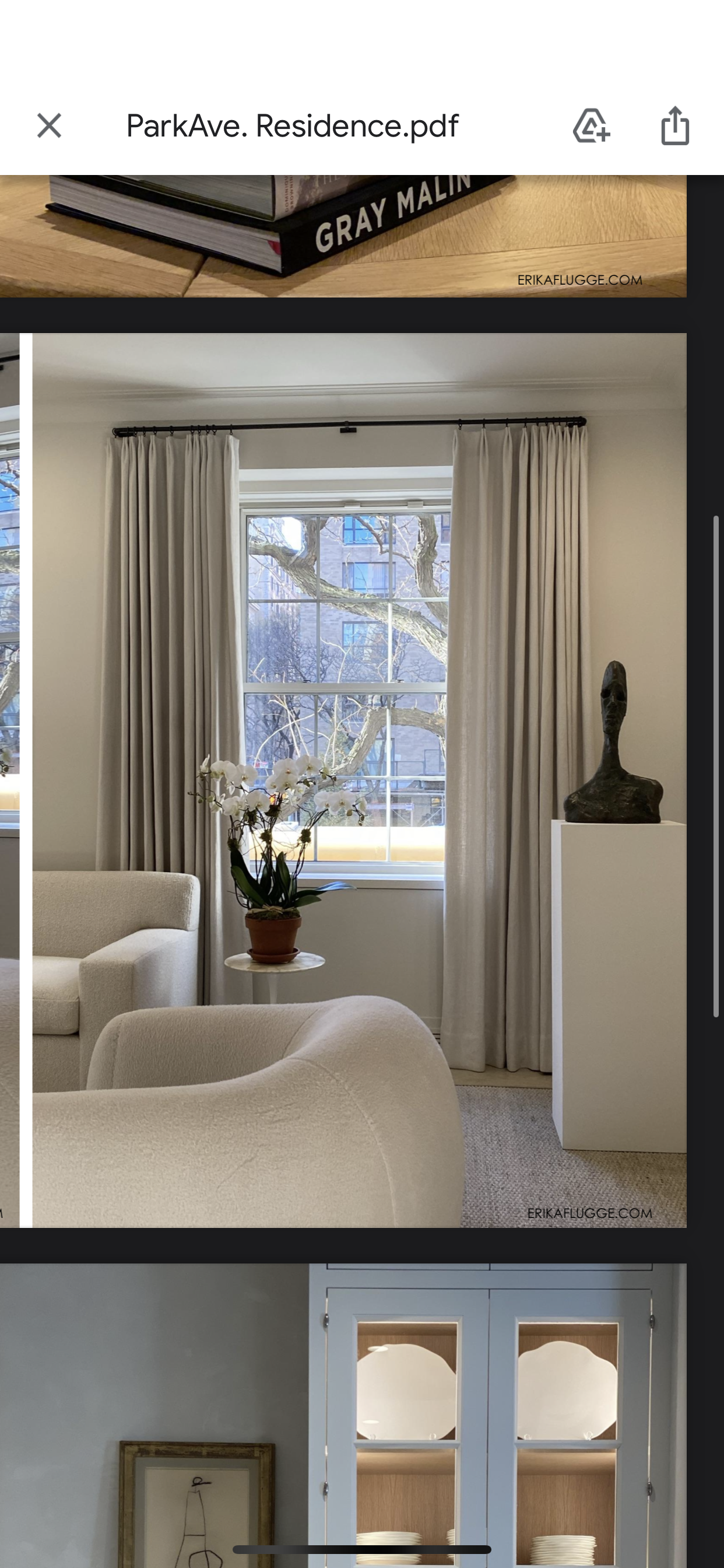
A pre-war co-op in Manhattan is not a canvas. It is a constraint system with its own logic, its own history, and its own administrative layer — and good millwork for a pre-war building begins with understanding all three before a drawing is made.
The physical conditions are well-known to anyone who has worked in these buildings: ceilings that run 9'6" to 11' in primary rooms, plaster walls that are rarely plumb, floors that have settled unevenly over decades, and original architectural details — base moldings, crown profiles, door and window casings — that govern what new millwork must relate to. Standard upper cabinet heights look wrong in a pre-war apartment. Proportionally short against a 10-foot ceiling, a 30-inch upper cabinet reads as a kitchen from another building installed in this one. The proportions have to be recalculated for the room.
The structural conditions add another layer. Pre-war buildings are typically steel-frame or bearing-wall masonry construction with plaster over metal lath. The walls are hard — fastening into them requires the right anchors. But they are not always where the drawings say they are. We confirm wall locations, window and door openings, and ceiling heights in the field before finalizing any drawing. The drawings are a starting point, not a fact.
The administrative conditions are often the most complex to navigate. A pre-war co-op has a board, a managing agent, and a superintendent — each with authority over different aspects of a renovation. The board approves the scope. The managing agent sets the construction window — typically 9 to 5, Monday through Friday. The super controls service elevator access. Understanding who to talk to about what, and in what order, is part of the project.
The buildings and spatial systems reference covers pre-war co-ops, post-war concrete buildings, glass towers, townhouses, and loft conversions — each typology with its own physical and administrative reality. The buildings and projects reference documents how these conditions played out in specific completed commissions.
The most common mistake in a pre-war project is treating it like any other apartment. The ceiling is higher. The walls are harder and less regular. The building has strong opinions. A kitchen designed to standard dimensions in a pre-war apartment looks imported — technically correct and proportionally wrong. The rooms were built with a scale in mind. The millwork has to know what that scale is.