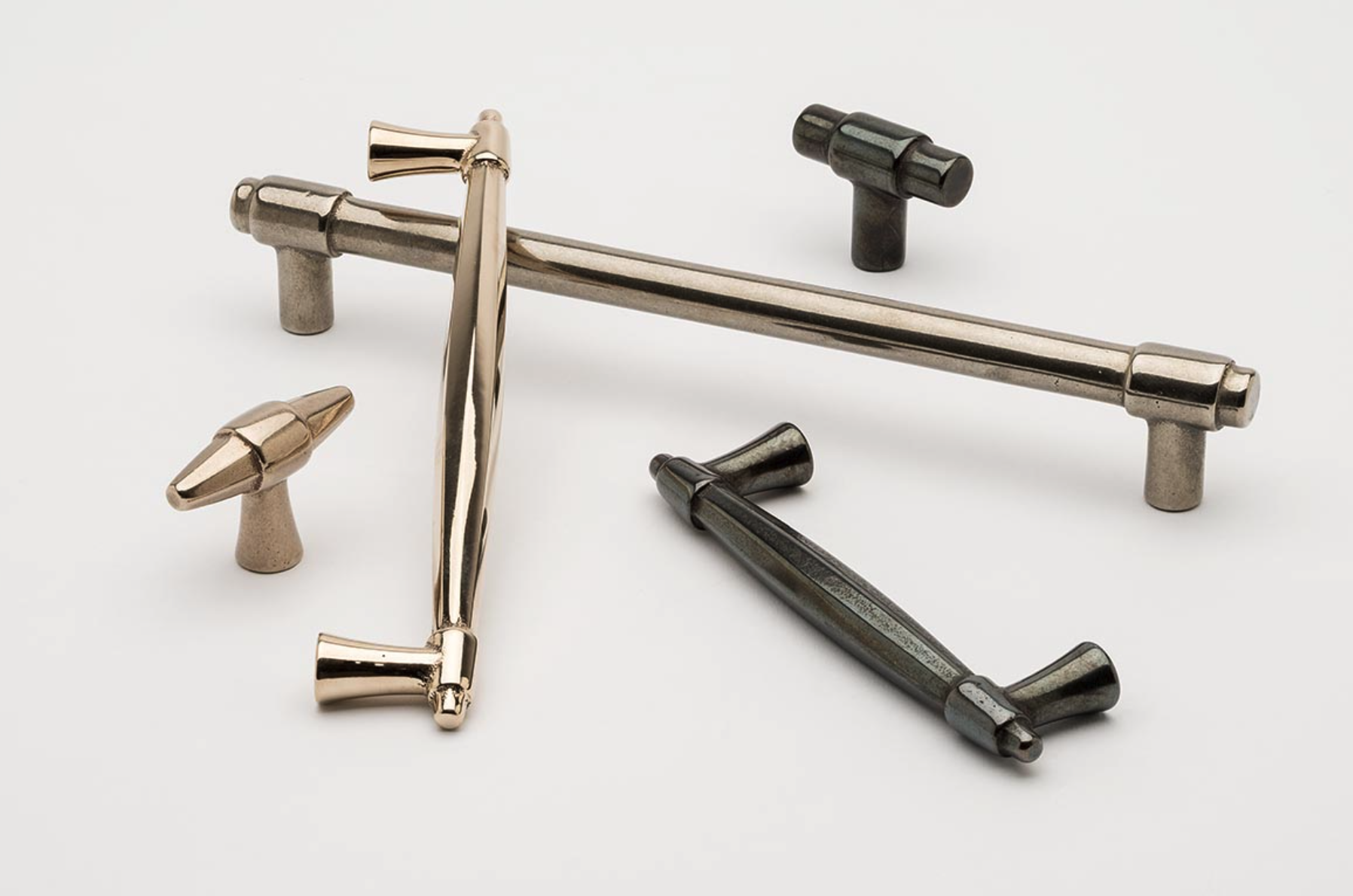
A piece of millwork is experienced at three distances. From across the room, you read the proportion, the color, the overall composition. From arm's length, you read the grain, the surface quality, the joint detail. In hand — your hand on the pull, your fingers on the edge of the door — you read the hardware.
The hardware is the most touched surface in a piece of millwork. A kitchen with twenty-four drawers and twelve cabinet doors is a kitchen where the hardware is contacted dozens of times a day. A dressing room with full-extension drawer systems is a room where the slides and pulls are in use every morning. The hardware is not a detail. It is the primary tactile experience of the piece, repeated every day for the life of the installation.
This is why specifying hardware as an afterthought produces work that feels wrong even when it looks right. The proportion may be correct. The finish may match. But if the pull was chosen from whatever was available at the end of the project — when the budget had been allocated elsewhere and the schedule required a quick decision — it will feel like what it is: a decision that was not made. The weight will be off. The hand will be slightly wrong. The mechanism will not be as good as the rest of the piece.
Hardware specification begins with the pull or knob — the most visible component and the one that most directly expresses the aesthetic intent of the piece. Bar pull or cup pull, large or small, with or without backplate, in what finish. These decisions should be made in relation to the furniture profile and the room's material palette — not after the piece is built.
Behind the visible hardware is the mechanism hardware: the hinges, the drawer slides, the door dampers. This is where quality differences are most consequential over time. A Blum Tandem slide with Blumotion soft-close is mechanically superior to a standard undermount slide in ways that are immediately perceptible in use and become more so over years. The soft close is not a luxury — it is what prevents the drawer from slamming, which over ten years of daily use is the difference between hardware that still works correctly and hardware that has loosened and degraded.
The construction and joinery reference covers hardware taxonomy — drawer systems, hinge systems, door mechanisms, and the specification logic that governs how we select hardware for different applications. The materials and specification reference covers hardware finishes, their durability characteristics, and how they interact with wood species and surface finish.
The practical rule: specify hardware at the same time as material and finish, not after. The pull proportion needs to be resolved against the door or drawer face proportion. The finish needs to be selected in relation to the room's full metal palette — plumbing fixtures, lighting, window hardware. A hardware finish chosen in isolation from the rest of the room's metals will not look wrong in any single photograph. But in the room, every day, it will read as slightly off. The eye finds these things even when the mind cannot name them.