The question we hear most often from clients approaching a large renovation is some version of: what exactly are we commissioning? This is a fair question. The millwork industry is not transparent about scope, process, or what separates one level of work from another. The answer is more specific than most people expect.
**A millwork program is not a collection of furniture**
The word millwork encompasses everything from a stock-cabinet kitchen assembled from a big-box catalog to a floor-to-ceiling library fabricated in quartersawn white oak with brass hardware and a brass rolling ladder. These things share a name and almost nothing else. The confusion this creates is not accidental — the lower end of the market benefits from the association with the upper end.
A bespoke millwork program begins with drawings. Not catalog selections — drawings. Each piece is dimensioned to its specific room, its specific wall, its specific ceiling height and floor condition. The drawing process is where the specification decisions are made: species, construction method, finish, hardware, profile details, countertop material, interior fittings. Every dimension is resolved before fabrication begins.
**What the scope typically covers**
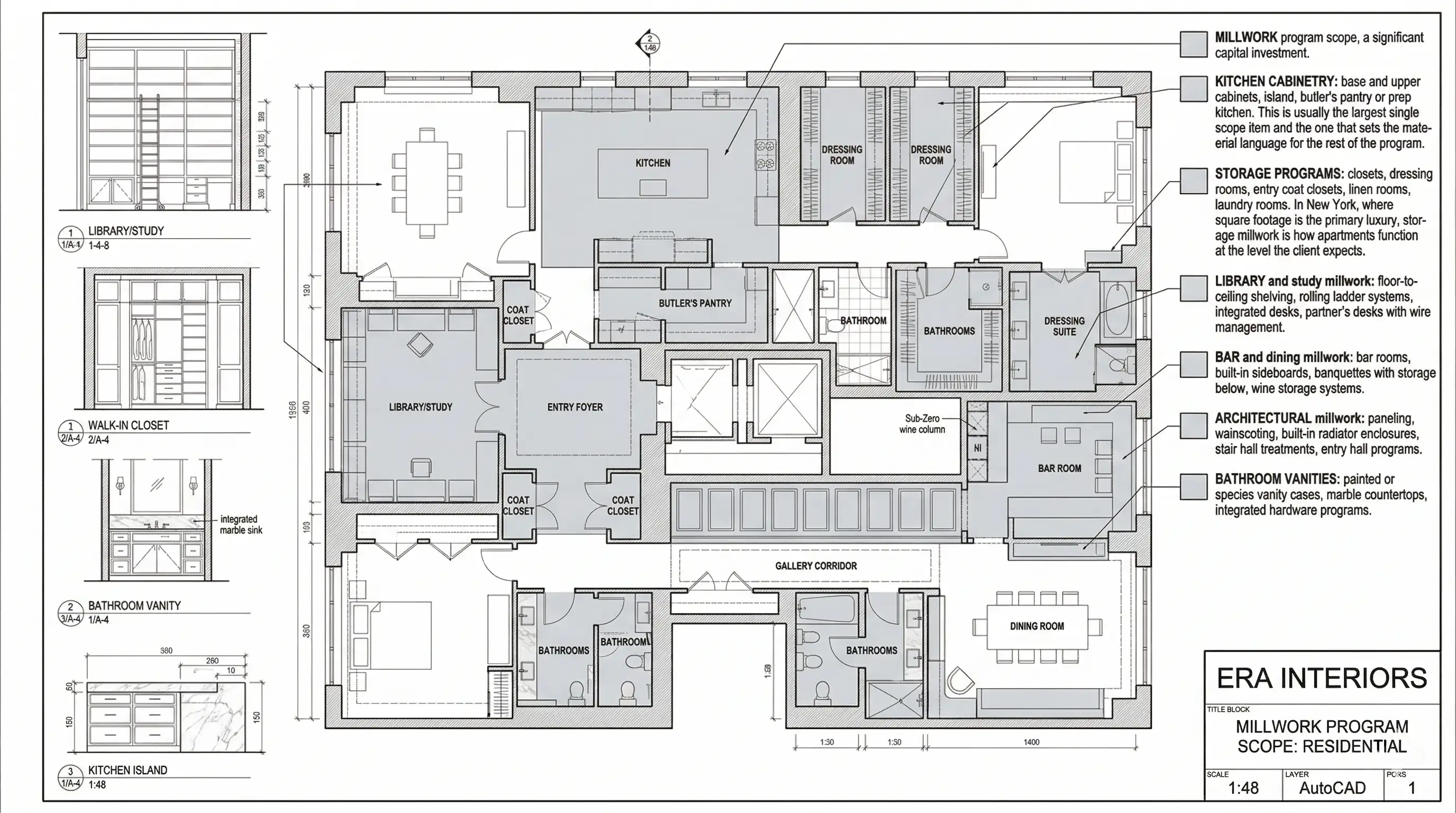
A full residential millwork program — the kind that represents a significant capital investment in a residence — typically includes some combination of the following:
Kitchen cabinetry: base and upper cabinets, island, butler's pantry or prep kitchen. This is usually the largest single scope item and the one that sets the material language for the rest of the program.
Storage programs: closets, dressing rooms, entry coat closets, linen rooms, laundry rooms. In New York, where square footage is the primary luxury, storage millwork is how apartments function at the level the client expects.
Library and study millwork: floor-to-ceiling shelving, rolling ladder systems, integrated desks, partner's desks with wire management.
Bar and dining millwork: bar rooms, built-in sideboards, banquettes with storage below, wine storage systems.
Architectural millwork: paneling, wainscoting, built-in radiator enclosures, stair hall treatments, entry hall programs.
Bathroom vanities: painted or species vanity cases, marble countertops, integrated hardware programs.
**What distinguishes bespoke work from production work**
The distinguishing characteristics of bespoke millwork are not visible in the first photograph. They are visible over time — in whether the doors still close cleanly after ten years, in whether the finish holds at the edges where production finishes fail, in whether the joinery at a complex corner remains tight through the humidity cycles of a New York apartment.
The immediate visible differences are in the details: the reveal dimension on an inset door, the consistency of the gap between adjacent panels, the quality of the profile at a crown junction, the weight of a drawer opening on full-extension slides. These are the details that an architect or experienced designer reads immediately and that a client learns to read over time.
Our Specification Standard documents four quality tiers in detail, with the cost implications of each. Our Construction & Joinery collection covers the fabrication methods that separate the tiers. The Buildings & Projects collection provides specific scope records from completed commissions.
Related: What Inset Construction Actually Requires · Hardware Is the Last Material Decision and the Most Visible · Veneer Sequence Is a Design Decision