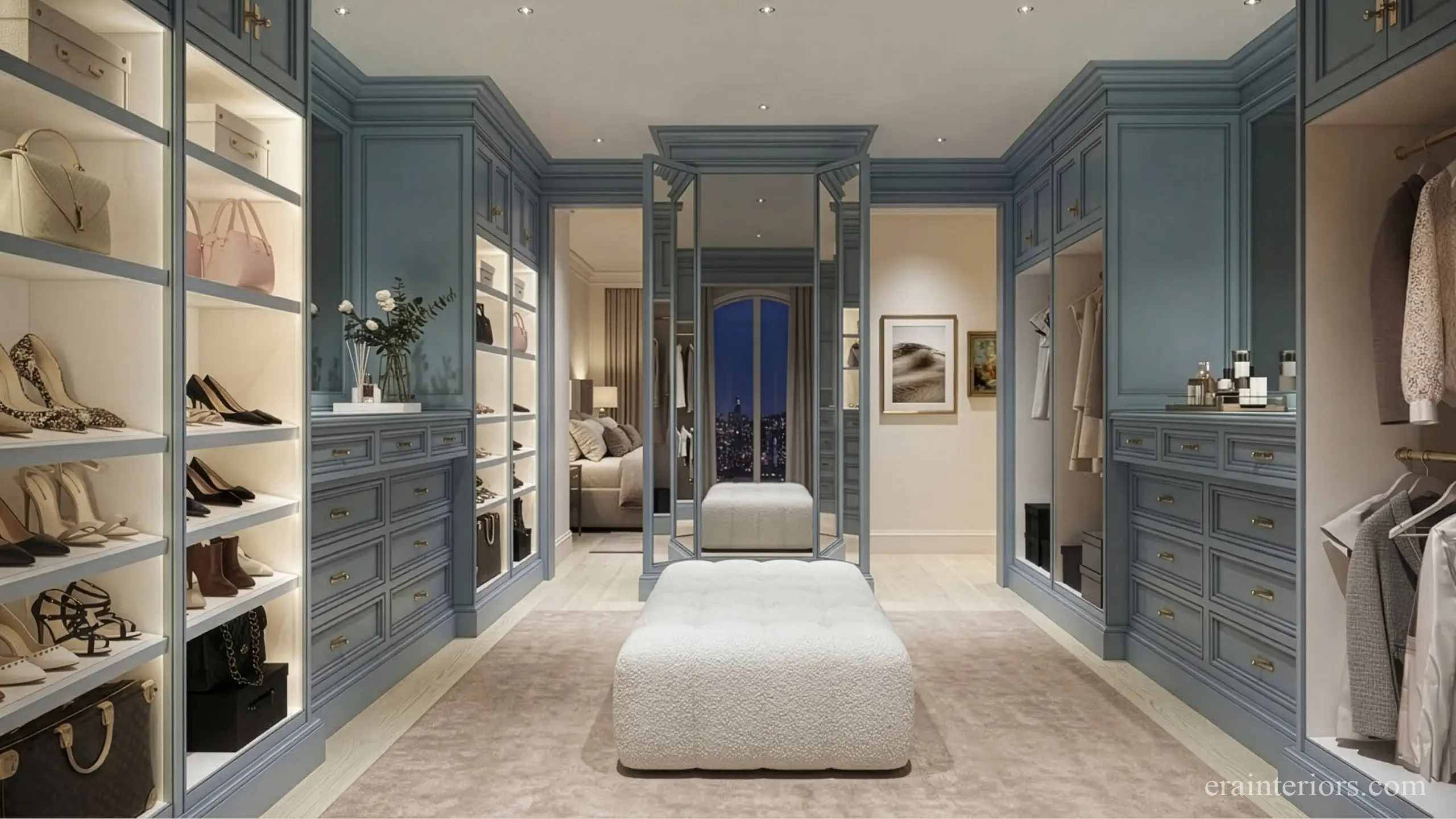
A dressing room is not a large closet. The specification decisions that govern a well-resolved dressing room program are different in kind, not just degree, from those that govern a reach-in closet. The difference is in how the space is experienced — and that difference drives every decision from the floor plan to the hardware.
**The dressing room as a room**
A reach-in closet is optimized for storage. A dressing room is optimized for use. The distinction sounds obvious but it has real specification consequences. In a reach-in, the primary variable is linear footage — how much hanging, shelving, and drawer storage can be extracted from the available footprint. In a dressing room, linear footage is still important but it is secondary to the experience of using the space: the relationship between the island dresser and the hanging sections, the placement of the mirror cabinet, the quality of the lighting, the material palette.
In our dressing room programs, we begin with a footprint analysis that identifies the minimum island clearance (typically 36" for comfortable use), the optimal hanging section placement by category (long hang, short hang, folded), and the lighting specification. The island dresser is always the anchor — it sets the proportion of the room and the height relationship between lower and upper storage.
**Linear footage optimization in secondary closets**
Secondary bedroom closets are a different problem. The rooms are typically smaller, the budget is lower, and the primary objective is functional storage rather than spatial experience. Our standard approach for secondary closets is linear footage optimization: every inch of the available footprint is converted to useful storage, typically through a three-wall system with hanging at standard heights, adjustable shelving above, and drawer storage below.
The material language for secondary closets in our programs is usually painted maple or MDF — the same hardware family as the primary dressing room, producing a unified hardware language across the floor. The specification standard for the painted work is the same as for the primary rooms: solid wood dovetail drawer boxes, full-extension slides, soft-close on every door and drawer.
**Built-in desk units for secondary bedrooms**
In family households, secondary bedrooms often double as study spaces. Our approach is a built-in desk wall unit — a continuous countertop at desk height with base storage below and shelving above, integrated with the closet program on the same wall. The desk unit shares the material language of the closet — same painted finish, same hardware — and uses the same construction standards as the storage millwork. The result is a room where the storage and work functions are fully integrated rather than furnished independently.
Our Spatial Systems collection covers storage optimization in detail for different NYC building typologies. The Buildings & Projects collection documents dressing room programs in several completed commissions, including a primary suite walk-in conversion from a laundry closet and a full his-and-hers program in a Westchester estate.
Related: What a Full Residential Millwork Program Actually Includes · What Inset Construction Actually Requires · Hardware Is the Last Material Decision and the Most Visible